You’re gambling with your future: Desperate SA mense risk it all betting with credit
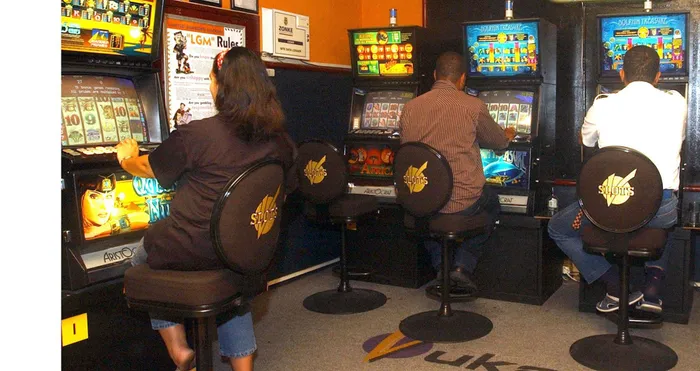
WORSE THAN COVID: More SA citizens have started gambling. File photo: Lulama Zenzile.
The recent Consumer Credit Market Report issued by the National Credit Regulator (NCR) showed some alarming statistics.
The number of consumers with impaired records increased by 202 759 (37.05%) to 10.02 million.
– 24.01% of the consumers with impaired credit records were three months or more in arrears;
– 10.24% had adverse listings;
– 2.81% had judgments and administration orders issued against them;
– Consumers classified in good standing decreased by 215 482 to 17.03 million, 62.95% of the total number of credit-active consumers;
– The rejection rate for credit applications in the second quarter of the year was a shocking 69.17%;
– The total outstanding consumer credit balances (gross debtor’s book) at the end of June was R2.31 trillion.
Consumers are now defaulting on accounts, and banks in particular are becoming stricter with their lending.
Capitec has 21 million customers, and has reported that their bad debts have surged 62% to R4.7bn.
Standard Bank’s credit impairment charges in the six months to June leapt 42% to R8.4bn. Absa in its interim results reported a 60% surge in total credit impairments to R8.3bn, while
Nedbank’s impairment charge increased 57% to R5.3bn.
South Africans are among the most indebted people in the world, with as much as 73% of disposable household income going towards servicing debt repayments.
People are using credit for everyday necessities, as expenditure has increased far more than income.
Though interest rates went up by 3.5 percentage points, homeowners are now actually paying 27.2 % percent more on their home loan.
Recent reports estimated that middle-class South Africans with a bond of R1.5 million, a car loan of R300,000, and a personal loan of R50,000 are now paying approximately R5,438 more per month on loan repayments compared to November 2021.
This means this person will need to earn R8 915 more per month at a gross level to have the extra R5 438 after tax.
I don’t think there are many South Africans who have had a R9 000 increase in their monthly income in recent times.
James Hodge, chief economist for the Competition Commission of South Africa (CCSA), recently stated that food inflation has been at a record high, and has hit the poorest consumers the hardest.

“Since Covid began, there has been an increase of about 34 percent in the price of foods with some like vegetables, oils, fats, breads, and dairy seeing much higher levels of inflation.
“For the poorest 10 percent of households, food makes up 40 percent of expenditure compared to 5 percent for the top 10 percent of households,” said Hodge.
“Inflation has had a completely lopsided effect, affecting the poorest consumers most.”
FNB senior economist John Loos says that some consumers are fortunate that their companies are flexible and allow them to work remotely to cut back on transport costs.

But for someone who works in retail or hospitality, for example, they do not have that option.
“Because salaries have not kept up with inflation and interest rates, people have had to cut down on non-essentials and postponable expenditures which may be essential but can be put off until further down the line,” Loos adds.
With creditors tightening the reins on lending, South Africans are desperate to find other sources of income and it seems that gambling is a last resort for many.
Interim results from Capitec show that betting is up 35% from a year ago.
Sun International, which owns a portfolio of casinos, hotels and resorts, said in August, that first-time depositors increased 469% and deposits jumped 216% in the six months to June.
Wikus Olivier, managing director CreditSmart Financial Services, advises that to avoid affecting your credit record, you must set a limit to your gambling and stay within that limit when playing online games.
It is very easy to overspend, max out your credit cards, and then have to deal with the problem of not being able to pay it back.
“I want to earnestly encourage you: Don’t gamble with debt.
“In some cases, people will take out additional loans to repay a card that they maxed out while gambling, or people turn to more gambling in the hopes of making up a shortfall by winning. It seldom happens the way they hope for,” says Olivier.
“Don’t spend what you don’t have, don’t gamble on debt. There will be an expectation of an installment after the money has been spent.”
Poobie Moodley works closely with people who have gambling addictions, and says that the current state of online gambling addiction in South Africa is more widespread than the Covid pandemic was, while an increasing number of women are also seeking help for their addiction to online gambling.
“Addicts do crazy things to get money to gamble. I have heard from married women who wait for their husbands to fall asleep so they can take their credit cards,” Moodley explains.
“They clean out their accounts and then place the cards back where they got them from.
“We even have people who don’t pay their kids’ school fees or don’t buy food for their families because they use the money for online gambling.
“Because it is online, gambling is easier than ever before. One can sit in front of their boss, children, partners, and clients and pretend to be working on their phones or computers, meanwhile, they are placing bets.”
Mense, times are tough – there is no getting away from that.
But let us try to not get ourselves deeper into trouble by resorting to gambling to get through this. You might be lucky and have a few wins, or you might just get so addicted to gambling that you end up losing everything you have.
Gamblers Anonymous can be contacted on:
079 368 4477: Western Cape
060 624 7140: Gauteng
083 783 5715: KZN