Refs about to blow up
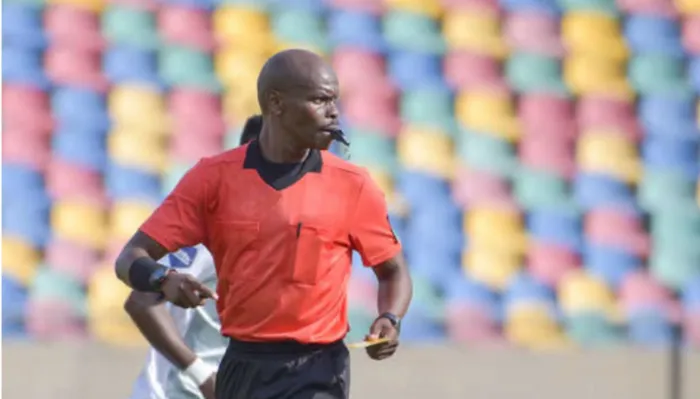
TOUGH JOB: Top ref Thando Ndzandzeka
The standard of refereeing has been blown stukkend by fans and coaches.
I would like to imagine that even the owners and the people at the club offices are seething following a string of poor performances by referees lately.
Look, referees are not perfect, they are human beings and have the most difficult job in the game.
They don’t only blow the whistle to penalise players who commit fouls, but they also have to manage the game itself.
Football is a game that is played to win, players and coaches strategise and find ways to be better than their opponents.
Some coaches and players even cheat to gain an advantage and referees are expected to manage all of that kind of stuff too.
Not an easy job to do right? It’s probably the worst job to do in SA pro football.
I’ve heard a lot of people criticise other role players, basing their argument on the fact that “those people don’t know what they’re doing, because they never played football”.
Have you ever said that about referees? Surely if you can say “that owner sucks because he never played football”, it should be the first thing you say about referees right?
They are after all on the pitch with the players and they are supposed to be the people who don’t only know the rules of the game, but they are supposed to be the best people that know how to apply them.
I once asked former Bafana Bafana midfielder Thando Mngomeni, why former pros don’t look at refereeing as an option for a post-football career.
Former Springbok Egon Seconds did it, he hit the books and went the journey to become a first-class rugby referee, while some international cricketers have become umpires.
And Mngomeni’s response surprised me, especially since there are such few options for players in the game locally when they retire.
Why don’t soccer players do it? Mngomeni explained that refereeing isn’t a nice job to do because both sets of players are against you.
His words were: “No ways guy, players swear and shout at you the whole game and you get paid peanuts.”
But he used a much more descriptive word that we can’t print here.
I told him about Seconds’ story and he said: “Look, if Safa can commit to making the working conditions better, then maybe we could consider it.”
He also agreed that, just like in coaching, ex-players are possibly in the best position to take up refereeing, apply the rules of the game and manage the play.
So here we are, over 20 years of PSL football and we have players that are paid in the hundreds of thousands, yet referees are earning stipends.
I’ve since also reached out to former Safa Western Cape secretary Simphiwe Clans to take us through some of the processes referees go through to earning their qualifications.
The former Safa administrator, who has since started his own sports management company, says: “Surely, the referee surely didn’t corrupt themselves. Where there’s corruption there is a corruptor, someone is going to gain from a referee that is corrupt.”
Clans stressed that these guys deal with a lot as referees and the work needs to start at grassroots LFA level.
He adds: “Nobody trains you to be a better referee. Back in the day, referees had a session every Monday.
“Those things don’t happen anymore. If you make a flop, you drop down to ABC [Motsepe League], but there’s nobody there to monitor you and also takes care of your rehabilitation.
“The things the referees go through are emotional more than anything else.”
He mentioned the Mpho Makola incident when he pushed a referee in 2019, saying: “Referees get traumatised, but we say we’re dropping you down there to the lower leagues, but nobody checks on the well-being of the referee.
“Nobody checks on how he’s dealing with the mistake he has just made. Sometimes it’s not your mistake, it’s someone else’s mistake but because you are the referee, it’s your mistake.”
He name-dropped another top South African referee and asked when I’d last heard of a match he has refereed, adding: “Do your research, he was sent home from Afcon, not because of his mistake, but it was the mistake of his AR (Assistant Referee).
“Nobody checked on him, the next thing he fails a fitness test and again nobody checks what the issue might be. You don’t become a bad referee overnight.
“Failing that fitness test meant he wouldn’t go to the World Cup, so emotionally he was messed up [but he used a different word we can’t use here].
“Mentally, people need to be prepared, because it happens now that out of nowhere you get to referee a Nedbank Cup final.
“Who prepares you for the pressures that come with it? More importantly, who checks on you afterwards and what processes are followed to assist if you are struggling to cope?”
Then he finished with his trademark: “It’s a lot of things, uyabon’ (you see)!”
I felt some type of way, when I spotted one of the country’s top referees, I think she’s also a match commissioner, on the flight back home on Sunday.
I thought about what type of household they are going to, and what was going through their minds. I considered greeting, but then again thought about how they might actually appreciate it if nobody spotted them.
I was confused and needed to check myself for the comments I’d made in my mind.
TOUGH JOB: Top ref Thando Ndzandzeka