Thermal sensors at robots
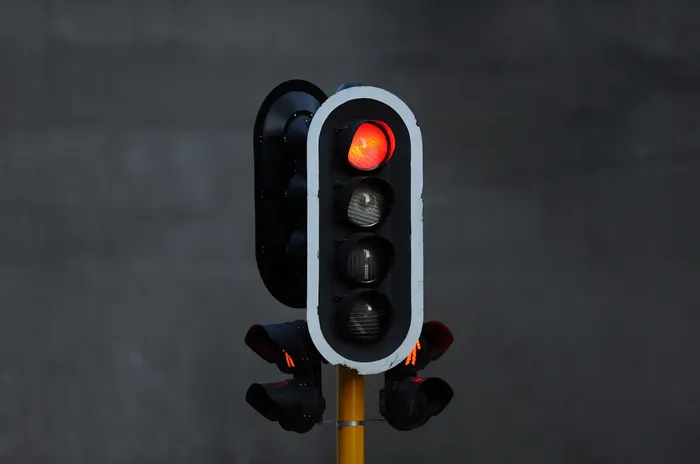
100110. Traffic light at Sauer Street Johannesburg CBD. 645 Picture: Dumisani Sibeko
The City of Cape Town has implemented thermal sensors at four pedestrian crossings in Blaauwberg, the first of its kind in South Africa.
This innovative system is widely used in Europe to improve traffic flow, says Rob Quintas, the City’s Mayco member for urban mobility.
The sensors have been installed at four pedestrian crossings along Marine Drive and Otto du Plessis Drive in Blaauwberg, as well these routes that carry high volumes of traffic:
Along Marine Drive opposite Milky Lane;
Along Otto du Plessis Drive opposite Seal Road;
Along Otto du Plessis Drive at Shell Road;
Along Otto du Plessis Drive close to Hill Road, opposite Doodles.
“We often see that vehicles are queuing at red traffic signals long after pedestrians have crossed the road,” said Quintas.
“With this system, the thermal sensors at pedestrian crossings are used to detect whether there is any pedestrian movement.
“Should the pedestrian leave the detection zone before the pedestrian cycle is activated, the pedestrian request will be cancelled altogether. Thus, vehicles will not be stopped unnecessarily.
“Hopefully with the thermal sensors at these crossings we will have fewer red light violations and frustrated drivers.
“The innovative system will also assist with traffic flow and pollution from idling vehicles. A huge bonus is that this system is less prone to vandalism – we often find the push buttons at pedestrian crossings are jammed with sticks or broken.
“A thermal pedestrian crossing does not require push buttons, seeing that it operates automatically,’ added Quintas. The new technology operates with an all-round detection sensor that uses a thermal image to detect pedestrians and bicycles.