Activists push for a Provincial State of Disaster over Cape Flats gang violence
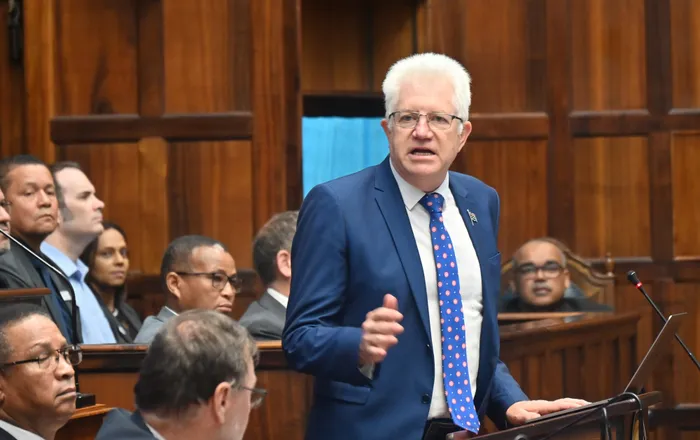
UNDER PRESSURE: Premier Alan Winde
Image: Picture: Ayanda Ndamane /Independent Newspapers

C4 has renewed its call for a Provincial State of Disaster over gang violence on the Cape Flats, as the Premier’s office maintains that policing falls under national government.
Image: AI Generated
THE Cape Crime Crisis Coalition (C4) has renewed its call for a Provincial State of Disaster over gang violence on the Cape Flats, accusing the Western Cape government of acting swiftly on natural disasters while failing to apply the same urgency to what it describes as a deadly, human-made crisis.
The renewed call comes as the office of Premier Alan Winde acknowledged the demands but stressed that crime-fighting powers lie primarily with national government.
“The Premier notes the request for disaster declarations and military interventions amongst other requests on crime interventions. Policing is a national competency and that is why we are meeting the national minister of police on this,” the Premier’s office said in response to media enquiries.
C4 has questioned the contrast in approach, pointing to the provincial government’s recent moves to assess damage from wildfires and consider a disaster declaration — a process that would unlock emergency funding, fast-track procurement and centralise intergovernmental coordination.
“This stark contrast in urgency and political will raises a deeply troubling question: in whose interests does the Provincial Government truly govern?” the coalition said.
C4 argues that the Disaster Management Act defines a disaster as a progressive occurrence causing death, injury or social disruption beyond a community’s ability to cope, and that sustained gang violence clearly meets that threshold.
“In October 2025 alone, approximately 400 people were murdered in the Western Cape,” the coalition said, adding that many of the victims were from impoverished communities on the Cape Flats.
Beyond the death toll, C4 said gang violence has led to schools shutting down because of gunfire, businesses being extorted into closure, pressure on healthcare services and entire neighbourhoods becoming no-go areas.
“What exists on the Cape Flats is not merely a crime problem; it is a sustained humanitarian emergency,” the coalition said.
C4 maintains that a Provincial State of Disaster would activate the Provincial Disaster Management Centre and enable a coordinated, multi-agency response involving health, social development, education and law enforcement.
“The Constitution obliges the state to protect the rights to life, dignity, and security of the person,” the coalition said in correspondence to the Premier.
While maintaining that policing is a national function, the Premier’s office said Winde would be engaging directly with law enforcement leadership.
“The Premier is also visiting priority police stations next week with Provincial Commissioner Patekile,” the office said.
C4 insists that engagement with national authorities does not remove the Premier’s powers under the Disaster Management Act, arguing that the legislation provides for provincial intervention in crises that exceed community coping capacity.
“We refuse to normalise the slaughter of our children. We demand that you use the power you have to intervene now. Enough is enough,” the coalition said.
At the time of publication, C4 said it was still seeking a direct engagement with the Premier on its call for a Provincial State of Disaster over gang violence on the Cape Flats.